

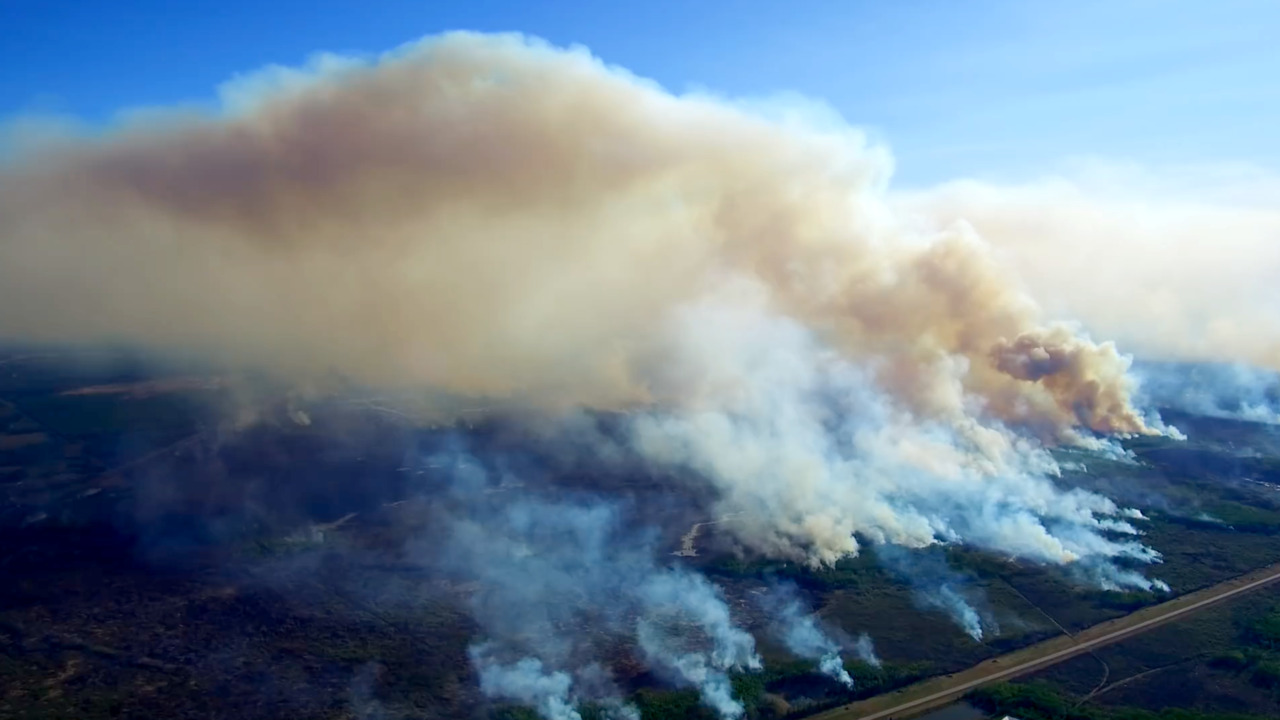
A raging wildfire that once stretched 2,900 miles from British Columbia on the west coast to Nova Scotia in the east burned more land this week, forcing thousands of people to evacuate their homes and triggering air quality alerts hundreds of miles south in Canada’s major cities. In a country known for its orderly nature and picturesque landscapes, the out-of-control fires have stoked fears, sparked anxiety, and underlined the perils of global warming.
The blazes in western Canada and on the other side of the border in Quebec have burned more than 9 million acres this year, almost double the average rate. The blazes have killed ten people and caused significant property damage. The wildfires have also prompted a flood of international firefighters to help local firefighting crews. They have come from as far afield as South Africa, France, and Australia.
Canadian authorities said Friday that the massive Donnie Creek fire in northeastern British Columbia is now consuming more than 310,800 hectares or 740 square miles. The blaze, started by lightning on June 1, is the second largest recorded in the province. It has displaced more than 2,500 people in the community of Tumbler Ridge, where the provincial government said residents were told to leave their homes and structures Thursday afternoon.
In the capital of Ottawa, a thick haze of smoke darkened the sun over Parliament Hill and the soaring Gothic Revival building that houses Canada’s political center. The air quality in the city remained dangerously high, and health officials advised people to wear masks when outside.
Residents of Toronto and Montreal woke up to similarly hazy skies, though the poor air conditions were not expected to last long as the wind direction shifts later this week.
A vast area of Canada battling wildfires for weeks is experiencing what atmospheric scientists call a blocking pattern, which keeps temperatures and precipitation low. Combined with the driest May on record in British Columbia, that contributed to the massive smoke sent south by the jet stream, which carries pollutants into North American cities, resulting in dangerously unhealthy air.
Fire experts say that the blazes will remain uncontrollable as long as the blocking pattern continues, especially in western Canada, where the weather conditions are the most extreme. Scientists have linked the rising fires to climate change, with warmer, drier springs increasing their intensity and causing the fuel to burn faster. Local governments and landowners are working to reduce the risk by managing forests and removing dead trees, but it will take years to reverse the trend. The fires are also being fed by a rapid snow melt, which has left more fuel available for ignition. In addition, a heat wave has dried out the ground and increased the risk of erosion and flooding. This could make the fires even more challenging to contain.