

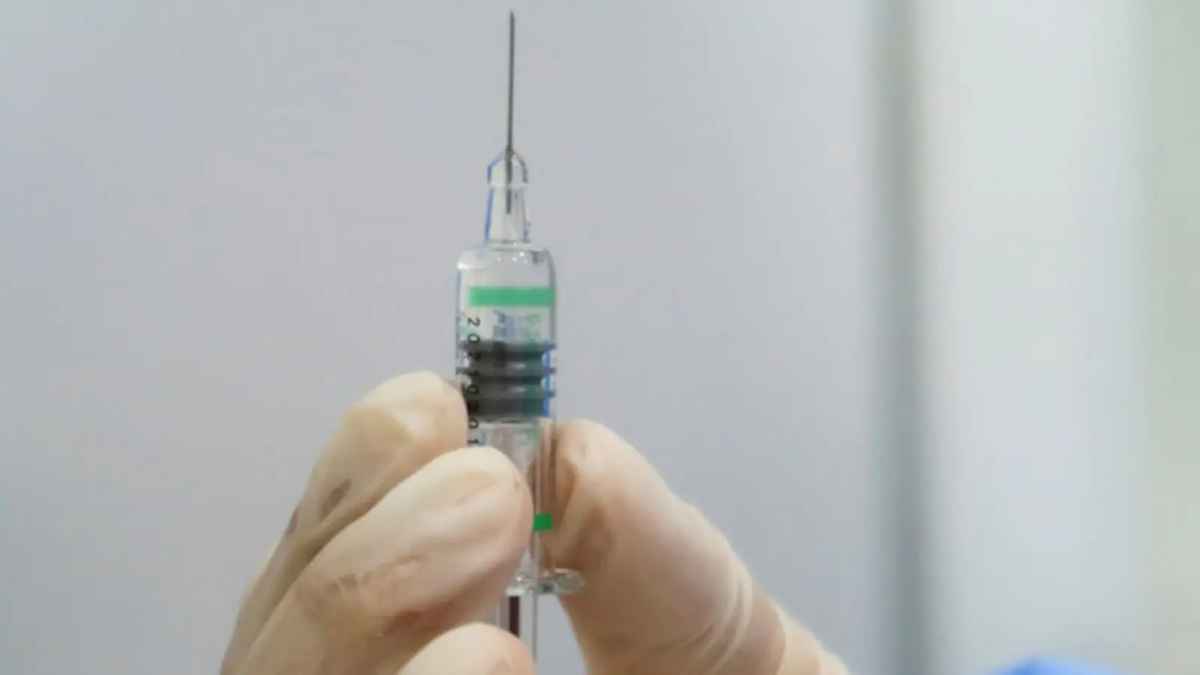
The future of vaccination may be just around the corner as an AI-designed needle-free vaccine has recently completed its Phase 1 clinical trial with positive safety outcomes, sparking excitement in the worldwide healthcare community. This achievement is an extraordinary feat that combines artificial intelligence and medical science to show how new technologies are revolutionizing the way life-saving treatments are developed and delivered.
Vaccines have Without a doubt been one of the greatest public health triumphs in the history of mankind, as they have helped prevent millions of deaths and kept infectious diseases under control worldwide. Yet, despite their effectiveness, most of the traditional vaccines still require needles for their administration, which can possibly turn some people away due to a fear of injections, difficulties with the logistics, or the dependence on healthcare personnel. For years, scientists have been searching for alternative methods of delivery capable of being effective yet easy enough to be administered on a large scale.
The latest vaccine is different from a conventional one. Manufactured with the aid of sophisticated artificial intelligence machinery, this vaccine was crafted to maximize the immune responses whilst being delivered in a needle-free manner. AI greatly contributed to the vaccine designing by processing biological information, modeling vaccine structures, and finding those formulations that are not only efficient in stimulating the immune system but are also safe.
The main purpose of Phase 1 clinical trials is to determine the safety, tolerability, and possible side effects in a limited cohort of subjects. The vaccine was evaluated by the study researchers to be safe and well-tolerated by the trial participants who only showed slight adverse reactions, if any. Such findings are a major achievement in the entire developmental timeline and will be followed by larger studies that will determine the vaccine’s efficacy.
Needle-less vaccination tends to be welcomed by patients as it addresses the biggest hurdle of patient non-compliance, which is the fear of needles. Really, there are millions of individuals worldwide who have needle phobia to some degree and this may prevent them from getting vaccinated. By doing away with injections, healthcare professionals might be able to increase the vaccine coverage levels and So minimize the barriers to preventive healthcare.
Such a system can be very advantageous in simplifying vaccine delivery in poor countries. Injections require the presence of a trained person capable of performing this task safely, which can be a major problem in such parts of the world.
A few years ago, artificial intelligence became a very powerful tool for pharmaceutical research. Traditionally, drug discovery and vaccine production involved a great amount of laboratory experiments as well as years of analyses. AI could speed up the process by quickly analyzing huge datasets, picking the most promising molecular candidates, and forecasting the performance of different formulations. Such a capability might cause shortening the timelines of development and decreasing the costs of research.
The healthcare professionals consider the success of the Phase 1 trial as proof that AI is progressively becoming a major player in present-day medicine. Artificial intelligence, instead of taking the place of scientists, is a great assistant that can equip researchers with more knowledge for making decisions and at the same time enable them to find innovative solutions to complex medical problems. The needle-free vaccine is the evidence of AI-designed product that has finally come out of the paper and is ready for practical clinical applications.
The effects are not limited to one vaccine only. If subsequent trials confirm its effectiveness, this kind of technologies could be employed for the production of a wide array of vaccines against different infectious agents. Researchers aim at a situation where AI-generated vaccines are developed rapidly in response to newly occurring health hazards and So the entire world benefits and is ready for future outbreak of diseases and pandemics.
Finding a way to maximize patient comfort is one more of the reasons why people would like a needle-free system. The inconveniences linked to the traditional injections include pain, local reactions, and injecting anxiety. With the alternative ways of administration that cause little or no pain at all, people may be motivated to get vaccinated and repeated doses to maintain immunity. For children, needle-free administration can be really a “game-changer” for routine immunization programs since they are usually the ones afraid of needles.
Really the Phase 1 trial has been completed successfully is very timely and healthcare sectors are progressively adopting these innovations. Development in biotechnology genomics AI, and digital health are opening new ways to improve the prevention, detection, and treatment of diseases. Combining AI-driven design with needle-free delivery is a killer example of how different tech can come together to address the healthcare issues that have been around for ages.
Scientists warn that more studies are necessary before the vaccine can be used by the general public. Larger Phase 2 and Phase 3 trials are needed to measure efficacy, find out the best dosage, and evaluate long-term effects in diverse populations. Besides, regulatory processes will also be critical to ensure that standards for safety and effectiveness are fulfilled.