

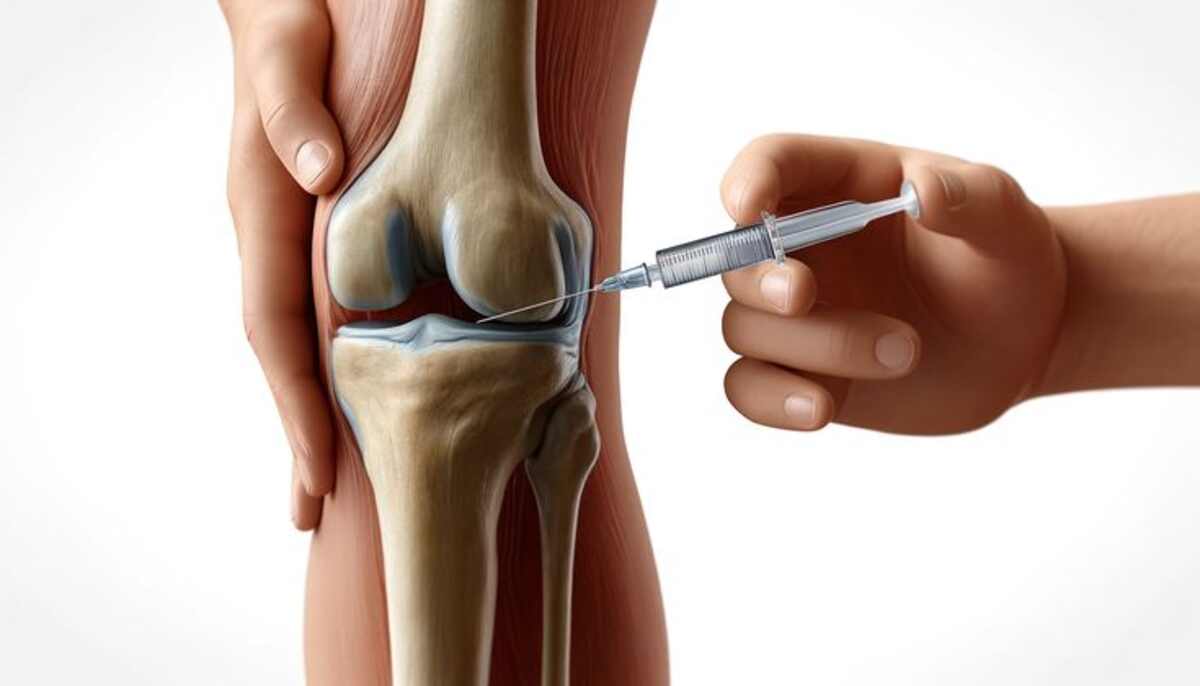
Research has led to a novel injectable hydrogel which may quite a bit improve treatment of osteoarthritis, the most common form of which results in cartilage wear and tear causing pain and stiffness for millions. The material is a liquid which can be delivered through a very fine needle, which rapidly thicken and gellifies on reaching the temperature of the joint. It then offers a depot for several weeks and simultaneously reduces joint friction in vivo. Most current therapeutic treatments are ineffective, as drugs injected into a joint can be quickly washed out over hours.
Patients require repeated injections to the same site or are given systemic drugs using oral medications, which can have much more widespread effects. The novel hydrogel is designed to overcome this limitation. To do this the Park lab at the University at Buffalo developed the system so that the drug loaded nanocarriers become embedded within the gel matrix.
As the matrix slowly relaxes the drugs diffuse out in a sustained and controlled fashion, providing a consistent local concentration at the site of interest. So, beyond delivering drugs, the platform is also acting as a viscosupplement. It will increase the viscosity of the lubricating fluid that the joint relies upon for lubricating thebones. This will reduce the friction generated between thebonesand enable better mobility. That’s why one injection will not only deliver the necessary drugs but will also restore some of the missing lubrication in osteoarthritic joints. The platform has been proved with a SIRT6 activator, which is a compound known to target the cellular aging process related to cartilage degradation. Though, it can also be carried other hydrophobic disease-modifying drugs.
Since we are working with materials that have already had regulatory approval, the process to move toward first in human trials seems more feasible than jumping with new novel ingredients. Looking at the initial work the gel does form at body temperature and to remain biocompatible. If the preliminary tests maintain their promise in larger sample sizes, people could gain the control over bio-artificial organs that many long for but not have to go in to the doctor so often. Instead of weekly or monthly visits, injections could be scheduled every few weeks or so. This would much reduce the costs and the burden of multiple needle pricks. There is no cure for osteoarthritis. Current treatments don’t remove the problem, only alleviate the symptoms or in some cases slow the process.
Cortisone shots reduce pain for a time, but damage the cartilage with repeated uses. These can be replenished in certain areas, but not always with lasting results. Liposomes prevent these problems by offering a longer-lasting solution that also lubricates the joint, overcoming two of the largest problems inherent in treating osteoarthritis: concentrating the medication where it is needed, and giving the joints some of the smooth gliding motion they lack. The team makes clear that the hydrogel is still in research.
There is promising data on animals and in test tubes but studies on humans will be needed to establish safety, optimum dose and duration of benefit in real patients. Yet, the idea has already generated interest as it merges two helpful treatments into one straightforward injection. For hundreds of millions with painful knees, hips or other joints the idea of a longer duration of pain relief after a single procedure is progress of substance.