

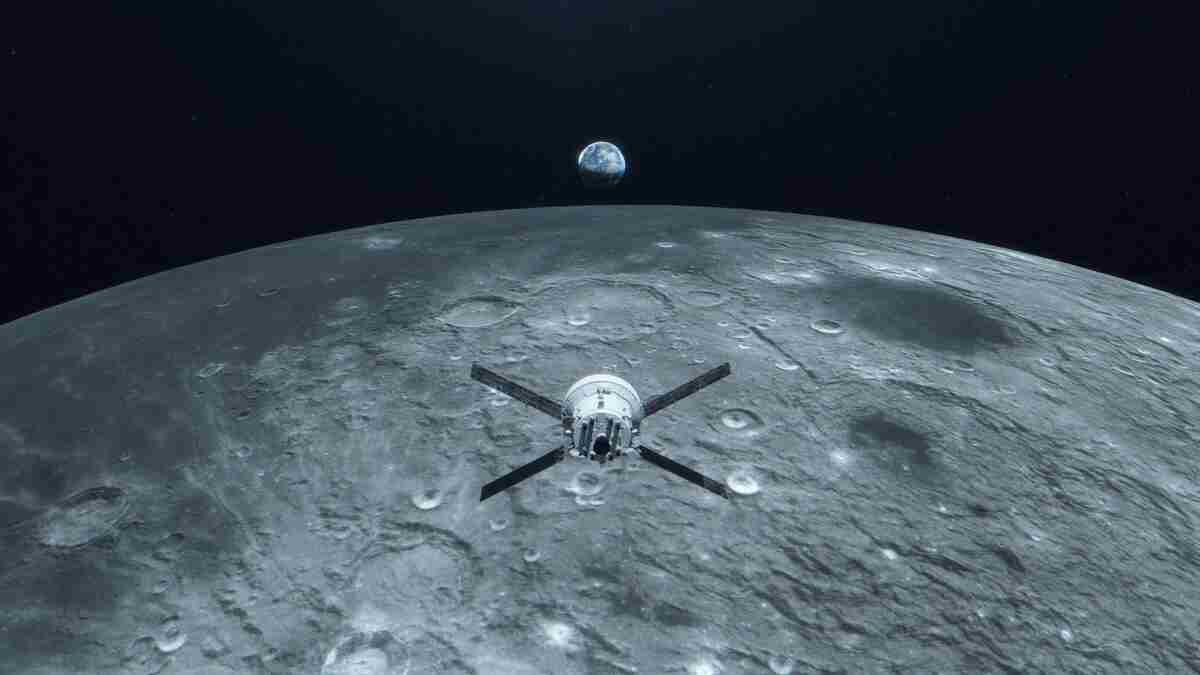
NASA leaders have offered a detailed preview of the milestones achieved during the historic Artemis II mission, highlighting how the program is shaping the future of human deep space exploration. As the first crewed mission beyond low-Earth orbit in more than five decades, Artemis II represents a critical step in humanity’s return to the Moon and eventual journey to Mars.
Launched on April 1, 2026, Artemis II carried four astronauts aboard the Orion spacecraft on a nearly 10-day mission around the Moon. The crew, including Reid Wiseman, Victor Glover, Christina Koch, and Jeremy Hansen, traveled farther from Earth than any humans since the Apollo era, completing a successful lunar flyby and returning safely to Earth on April 10. This mission marked the first time since 1972 that astronauts ventured into deep space, signaling a new era of exploration.
NASA officials emphasized that Artemis II was not just a symbolic mission but a comprehensive test of systems required for long-duration space travel. The mission validated the performance of the Space Launch System rocket and the Orion spacecraft, both of which are central to future lunar and Mars missions. From launch to re-entry, every phase provided critical data on navigation, propulsion, and life-support systems in deep space conditions.
One of the most significant milestones highlighted by NASA leaders was the successful execution of the translunar injection burn, which propelled the spacecraft from Earth orbit toward the Moon. This maneuver demonstrated the precision and reliability of the spacecraft’s propulsion system, a key requirement for future missions involving lunar landings and deep space travel. The mission also confirmed the effectiveness of Orion’s heat shield during re-entry, with initial assessments showing performance closely aligned with predictions.
Another major achievement was the validation of crew safety systems. Artemis II tested life-support capabilities, communication systems, and astronaut operations in a deep space environment, far beyond Earth’s protective magnetic field. These tests are essential for ensuring astronaut safety during longer missions, including those planned for the lunar surface and eventually Mars.
NASA leaders also highlighted the mission’s role in advancing international collaboration. The inclusion of Canadian astronaut Jeremy Hansen reflects the growing global partnership in space exploration, with agencies working together to push the boundaries of human capability. This collaborative approach is expected to expand further in upcoming Artemis missions, involving both government agencies and private companies.
Beyond technical milestones, Artemis II delivered powerful symbolic achievements. The crew captured stunning images of Earth from the far side of the Moon, offering a perspective that underscores humanity’s place in the universe. These moments not only inspire scientific curiosity but also reinforce the importance of continued investment in space exploration.
Looking ahead, NASA leaders have described Artemis II as the “foundation” for future missions. The data collected will directly inform the planning of Artemis III and beyond, where astronauts are expected to test landing systems and eventually return to the lunar surface. The long-term goal is to establish a sustainable human presence on the Moon and use it as a stepping stone for missions to Mars.
The success of Artemis II has also boosted confidence in NASA’s broader exploration strategy. With advancements in rocket technology, spacecraft design, and international partnerships, the agency is moving closer to achieving its ambitious goals. Leaders have stressed that each milestone achieved in Artemis II reduces uncertainty and brings humanity one step closer to deep space habitation.
As NASA continues to analyze mission data and refine future plans, Artemis II stands as a defining moment in modern space exploration. It not only demonstrates technological capability but also reignites the spirit of discovery that defined the Apollo era. With the foundation now firmly in pla