

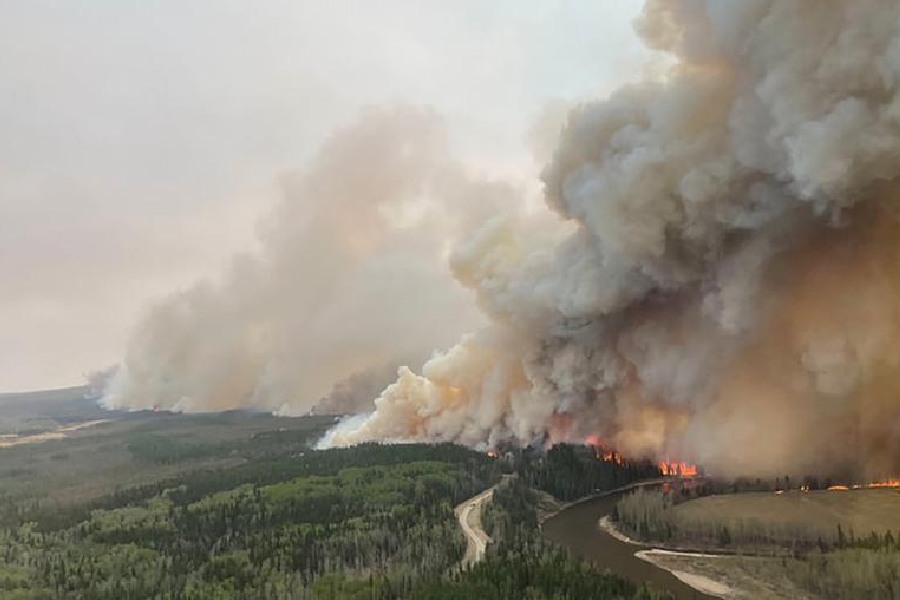
Canada is grappling with one of its worst wildfire seasons, with forest fires raging across nearly all provinces and displacing thousands. Hundreds of firefighters from Canada, the United States, Australia, and South Africa have been sent to help fight the flames. In a country revered for its serene landscapes and predictability, weeks of out-of-control wildfires have ushered in a powerful sense of fear. The blazes have also brought together an often polarized nation, with volunteers, firefighters, and army reservists from across the country pitching in to help.
Across Canada, more than 2.7 million hectares have been scorched this year, equal to more than five million football fields, federal Emergency Preparedness Minister Bill Blair said on Friday. Over the past decade, that’s more than ten times the average area burned by this time of year.
The hot, dry weather has exacerbated the situation across the country. In Alberta, the scorching heat wave has triggered more than 90 wildfires spreading rapidly, threatening homes and forcing people to evacuate. The blazes have also disrupted oil production in the region, home to some of the world’s largest oil sand reserves and Canada’s primary source of crude.
Last week, a wildfire caused the evacuation of thousands of residents of Halifax, prompting local officials to declare a state of emergency and close schools. The city’s deputy fire chief, Dave Meldrum, said the fast-moving blaze hopscotched through neighborhoods, burning some buildings and leaving others standing. As he spoke, he surveyed a neighborhood whose houses were charred black and smoky with thick, aromatic smoke.
In the western province of Alberta, where a devastating wildfire in 2016 destroyed thousands of homes in Fort McMurray, residents are bracing for another catastrophic wildfire season. The hot weather and drought have created ideal conditions for fires to spread quickly, and they are expected to intensify as the summer continues.
As a result, Canadian authorities have warned people to stay away from the countryside and avoid activities that could spark new fires. The warnings include refraining from using fireworks, barbequing, and flicking cigarette butts from car windows.
Officials also urged people to monitor local news and social media for updates on the fires and to follow official advice about preparing for evacuations. They have also urged people to donate money and clothing to aid evacuees.