

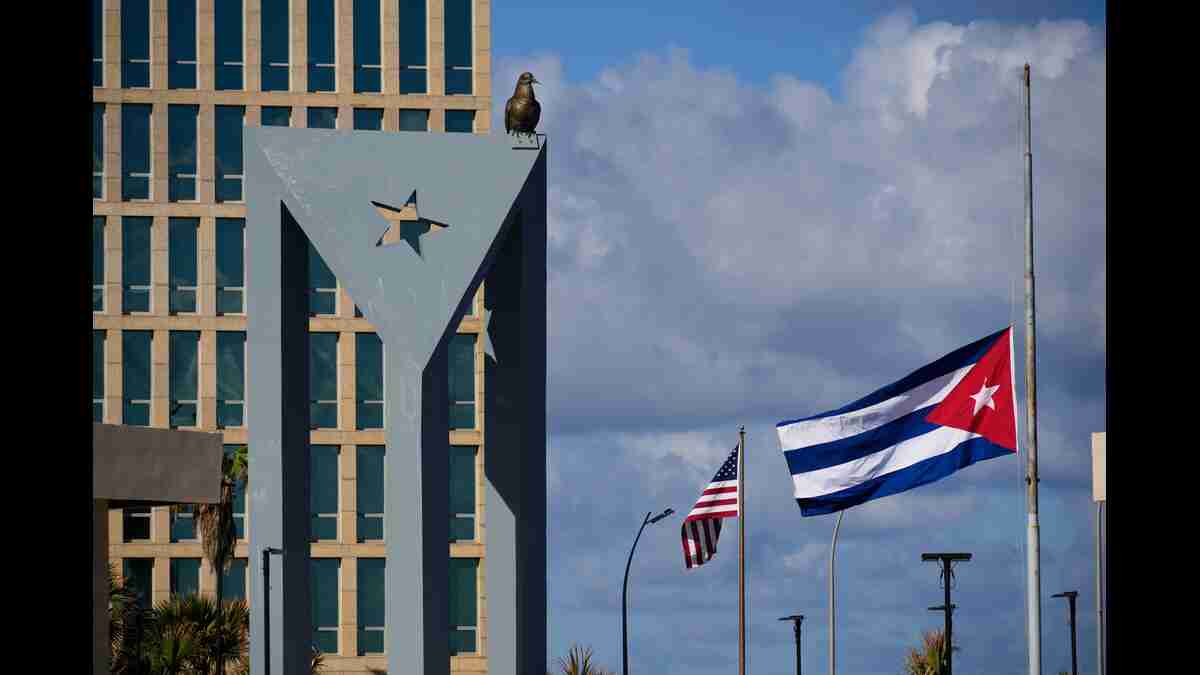
After years of strained relations and political hostility, the United States and Cuba have once again reopened diplomatic discussions, signaling a potentially significant moment in one of the world’s longest-running geopolitical standoffs. Officials from both nations have confirmed that talks are underway as the two governments attempt to address growing economic and political pressures affecting the Caribbean island and the broader region.
Cuban President Miguel Díaz-Canel recently confirmed publicly that his government has been engaged in discussions with representatives of the United States. The talks are reportedly focused on addressing key disputes between the two countries, including economic sanctions, migration issues, and Cuba’s severe energy crisis. Díaz-Canel described the diplomatic engagement as an attempt to find solutions “through dialogue” while maintaining respect for the sovereignty and political systems of both nations.
The renewed negotiations come at a difficult time for Cuba’s economy. The country has been experiencing a deep energy shortage after fuel imports dropped dramatically in recent months. Power outages lasting several hours have become common across major cities including Havana, placing pressure on hospitals, transportation systems, and everyday economic activities. Cuban officials believe diplomatic engagement with Washington could help ease some of these challenges by opening channels for cooperation or reducing restrictions that limit energy supplies.
On the American side, officials have acknowledged that discussions are taking place but emphasize that any improvement in relations would likely require significant reforms from the Cuban government. U.S. leaders have long criticized Havana’s political system and economic policies, arguing that political freedoms and economic liberalization would be necessary before any major easing of sanctions could occur. At the same time, Washington has suggested that diplomatic talks may offer a path to stability in the region and reduce tensions that have persisted for decades.
The relationship between the two countries has been marked by hostility since the early 1960s, when the United States imposed a sweeping economic embargo against Cuba after the Cuban Revolution. Over the years, relations have fluctuated between periods of cautious engagement and renewed confrontation. Although the countries briefly restored diplomatic ties in 2015, several political developments in subsequent years again strained relations and led to stricter sanctions and reduced diplomatic cooperation.
Recent developments suggest both sides may be exploring whether diplomacy could offer a way forward. Reports indicate that meetings have involved senior officials and intermediaries, with discussions focusing on practical concerns such as migration management, energy supplies, and security cooperation. Some analysts believe the talks are also connected to broader geopolitical shifts in Latin America and the Caribbean, where economic instability and migration pressures are forcing governments to reconsider long-standing policies.
In addition to the diplomatic talks, Cuba has reportedly taken several steps that observers interpret as gestures aimed at encouraging dialogue. One of the most significant moves was the announcement that dozens of prisoners would be released in what officials described as a humanitarian decision. While the Cuban government framed the move as part of internal legal procedures, some analysts believe it could also serve as a signal of goodwill during sensitive negotiations.
Despite the renewed dialogue, the path toward improved relations remains uncertain. Political differences between Washington and Havana remain deep, and both governments face domestic pressures that could complicate negotiations. U.S. officials continue to demand political reforms, while Cuban leaders insist that any agreement must respect national independence and the country’s political system.
Even so, the reopening of diplomatic discussions represents a noteworthy development in international relations. For many observers, the talks offer a rare opportunity for two longtime adversaries to explore solutions through negotiation rather than confrontation. If the discussions lead to concrete agreements on energy cooperation, migration policies, or economic engagement, they could reshape the future of relations between the United States and Cuba and potentially influence stability across the wider Caribbean region.