

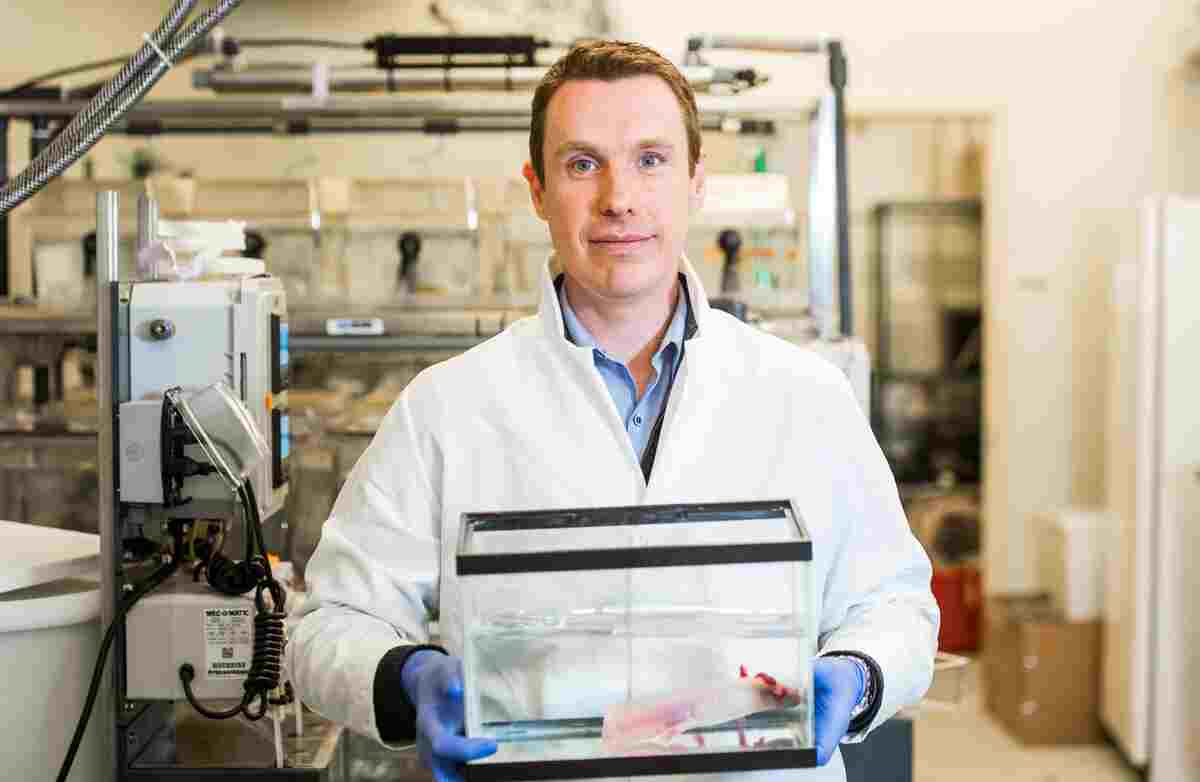
A groundbreaking medical advancement is reshaping the future of organ replacement as scientists successfully develop a fully functional lab-grown oesophagus. This innovation, led by researchers from Great Ormond Street Hospital and University College London, represents a major leap forward in regenerative medicine and offers new hope for children born with life-threatening conditions affecting the food pipe.
The research focuses on a rare condition known as oesophageal atresia, where babies are born without a fully formed connection between the mouth and stomach. In severe cases, the gap between the two ends of the oesophagus is too large to repair through conventional surgery, leaving patients dependent on feeding tubes and multiple complex procedures throughout childhood.
Scientists have now developed a solution that could change this reality. Using advanced tissue engineering techniques, they created a bioengineered oesophagus by taking a donor organ from a pig and removing all its original cells, leaving behind a structural scaffold. This scaffold is then repopulated with the patient’s own cells, allowing the new organ to function as a natural part of the body without the risk of rejection.
The breakthrough has already shown remarkable success in animal trials. In the study, lab-grown oesophaguses were implanted into pigs, where they developed fully functioning muscles, nerves, and blood vessels over time. Within months, the transplanted organs were able to contract and move food effectively, enabling normal swallowing and healthy growth in the animals.
One of the most significant advantages of this approach is that it eliminates the need for immunosuppression, a common requirement in traditional organ transplants. Because the engineered oesophagus is built using the recipient’s own cells, the body recognizes it as natural tissue. This reduces complications and allows the organ to grow along with the patient, making it especially valuable for treating children.
The process itself is both sophisticated and efficient. After preparing the scaffold, scientists cultivate the patient’s cells in a laboratory and introduce them into the structure. The organ is then placed in a bioreactor, where it develops under controlled conditions before being transplanted. The entire process currently takes around two months, aligning with existing treatment timelines for affected patients.
Beyond treating congenital conditions, the implications of this breakthrough extend much further. Experts believe that similar techniques could eventually be used to repair or replace organs damaged by cancer, injury, or other diseases. The ability to grow personalized organs in a laboratory could transform transplant medicine, reducing waiting lists and dependence on donor organs.
Despite the promising results, the technology is still in its early stages. Researchers are continuing to refine the process, improve long-term outcomes, and ensure safety before moving to human trials. Early estimates suggest that clinical trials in humans could begin within the next five years, bringing the medical community closer to real-world applications.
This breakthrough also highlights a broader shift in modern healthcare, where regenerative medicine is becoming a central focus. Scientists are increasingly exploring ways to repair the body using its own biological building blocks, moving away from traditional transplant methods toward more personalized and sustainable solutions.
The success of the lab-grown oesophagus marks a defining moment in medical science. It demonstrates that complex organs can not only be engineered but also function effectively inside living organisms. For families dealing with rare and life-threatening conditions, this innovation offers something that has long been out of reach — a future where a single procedure could replace years of treatment and dramatically improve quality of life.
As research continues to progress, the dream of lab-grown organs is rapidly becoming a reality. This development is not just a scientific achievement but a powerful sign that the future of medicine will be defined by innovation, precision, and the ability to rebuild the human body from within.