

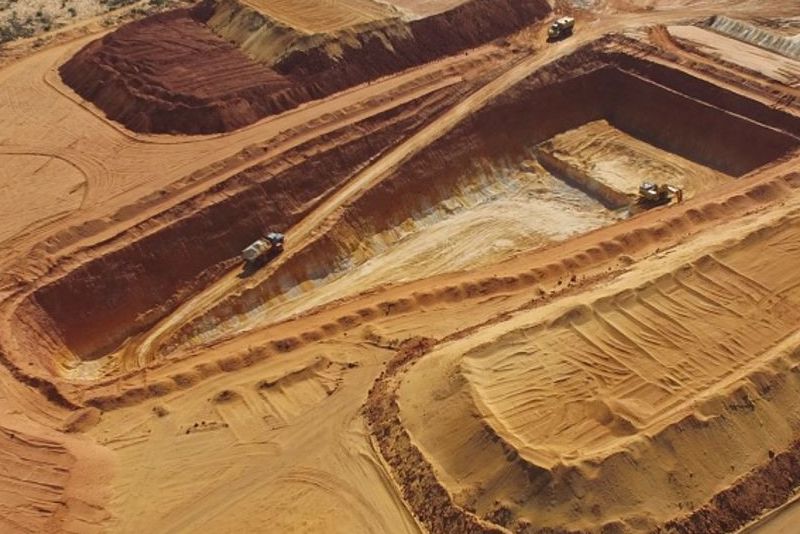
China, Nigers second-largest foreign investor after former colonial power France, has, in the past two decades, plowed billions of dollars into the landlocked West African nation, mainly for the exploration of oil and uranium. The soaring prices of those commodities have made Niger a magnet for investors. Still, the country is grappling with a more complicated reality: its mineral riches are helping to enrich a few individuals at the expense of the wider community.
Niger is rich in uranium, with reserves believed to total about 5 percent of the world’s total. But extracting the metal is more complex than digging holes in the ground and pumping it out. The process is costly; it takes years to bring a new mine online. In addition, uranium mining is often associated with environmental risks, including water contamination and waste disposal. As a result, the industry has been criticized for negatively impacting local communities.
The government has created a special tax incentive regime for uranium companies to mitigate such effects. It provides exemptions from taxes on fuel, corporate profits, and duty on exports. It also allows companies to set aside 20% of their profits for reconstruction and rehabilitation projects. The resulting windfalls have been a big boon for the country’s economy. However, they have also raised concerns among residents and civil society groups, who complain that the benefits have gone to a few individuals rather than the wider population.
One of those critics, a nongovernmental organization called ROTAB, has warned against allowing China unrestricted access to natural resources and urged authorities to prioritize environmental protection. Iliyasou Abubakar, a member of the group, told NBC News that he feels that Niger is giving Chinese investors an unfair advantage.
The state-owned French company Areva monopolized the country’s uranium production until 2007, when two Chinese-backed firms, Somair and Cominak, began operating at the Teguidda and Madaouela sites in the Agadez region. Currently, the Societe des Mines dAzelik SA (SOMINA) joint venture, which operates the two sites, is majority owned by the Chinese consortium of CNNC International and Sinopec Beijing National Uranium Co., Ltd., with the Niger government holding the remaining shares.
Somair and Cominak have incurred the wrath of several Nigeri civil-society groups, who protested that the companies support rebels in northern Niger. The groups have also accused the companies of failing to share their revenue with the local community and using funds to purchase weapons for Nigerien security forces in the north, which could be used against the rebels. The companies deny the accusations. Regardless, the protests underscore a fundamental problem: While Niger is rich in mineral resources, it remains one of the poorest countries in the world. As a result, it needs more capacity to negotiate on something like an equal footing with its robust economic partners. Until that changes, the potential for turmoil will continue to rise. Courtney Kube is a correspondent covering national security and the military for NBC News. Mosheh Gains is a Pentagon producer for the network.