

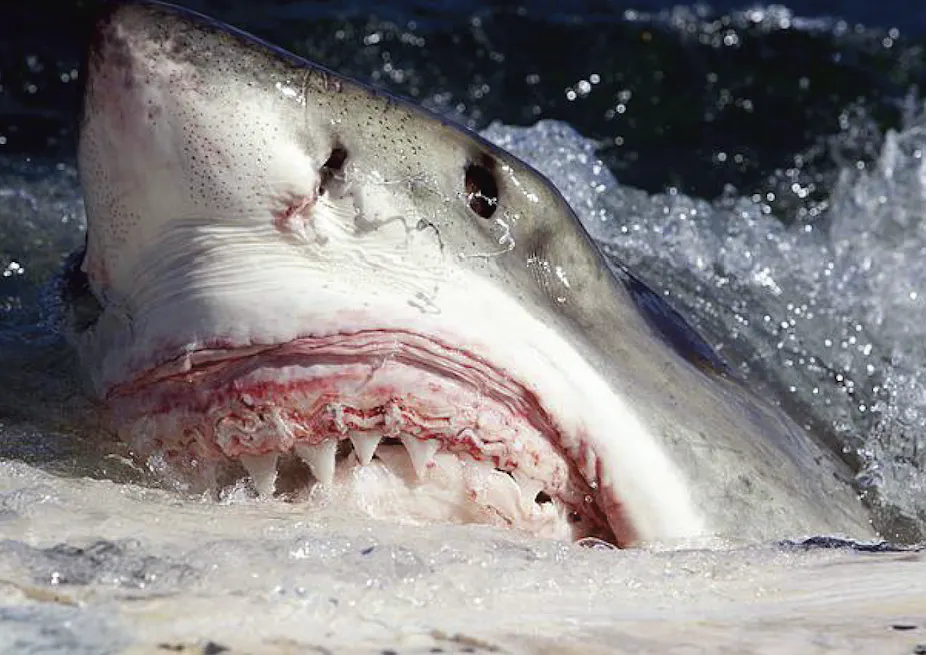
Shark attacks have put Long Island beaches on high alert as the summer season opens. None of the bites have been fatal, but they have kept lifeguards and other first responders busy in the past two weeks. The incidents have heightened fears among beachgoers and raised the ocean’s top-level predator profile, prompting scientists to warn that warmer-than-normal waters could be to blame.
One person reportedly suffered a laceration to the foot after being bitten by a shark off Jones Beach in Nassau County on Thursday. The attack comes on the heels of reports of at least five other shark encounters along the state’s eastern coast over the past two weeks.
On Tuesday, a 47-year-old man in chest-deep water off Quogue Village reported feeling an apparent shark bite to his leg, according to Suffolk County police. He escaped the water safely, and his injuries were not considered life-threatening. A few hours earlier, a 49-year-old man was bitten while swimming off Fire Island Pines, and a 15-year-old girl was nipped while swimming off Robert Moses Beach. The latter incident occurred just hours after the teenager swam away from Kismet Beach with puncture wounds to her left foot.
Officials have not yet confirmed what stung the 15-year-old, but it is believed to be a sand shark, which is usually docile despite its frightening ragged-tooth appearance. They often mistake hands and feet for the bunker fish or other baitfish they feed on.
The spate of attacks has sparked fears among swimmers enjoying the Fourth of July holiday weekend on Long Island’s East End. But local officials have reassured people that the beaches are safe and warned visitors to stay close to shore, especially when lifeguards are not on duty.
Across the region, shark sightings have jumped to a record number this year, but experts say that it is not an indication that attacks will increase. Scientists say warmer-than-normal water and an increased population of marine animals that sharks typically feed on are most likely to blame for the higher number of sightings.
Statewide, there have been nine shark attacks in New York this year and eight last year. Governor Kathy Hochul recently announced that a series of steps were being taken to help protect swimmers, including the deployment of a park police boat and New York State Police helicopter patrols and new educational materials highlighting how to spot sharks from the air.
Drones also play a critical role in shark spotting on Long Island, where the technology is widely used to identify dangerous marine life and track their movements. Hochul also said the state would purchase ten new drones to improve aerial surveillance of Long Island’s beaches and ocean waters. She says she is also working to bolster partnerships with federal, state, and county agencies, emphasizing sharing information about potential shark sightings.