

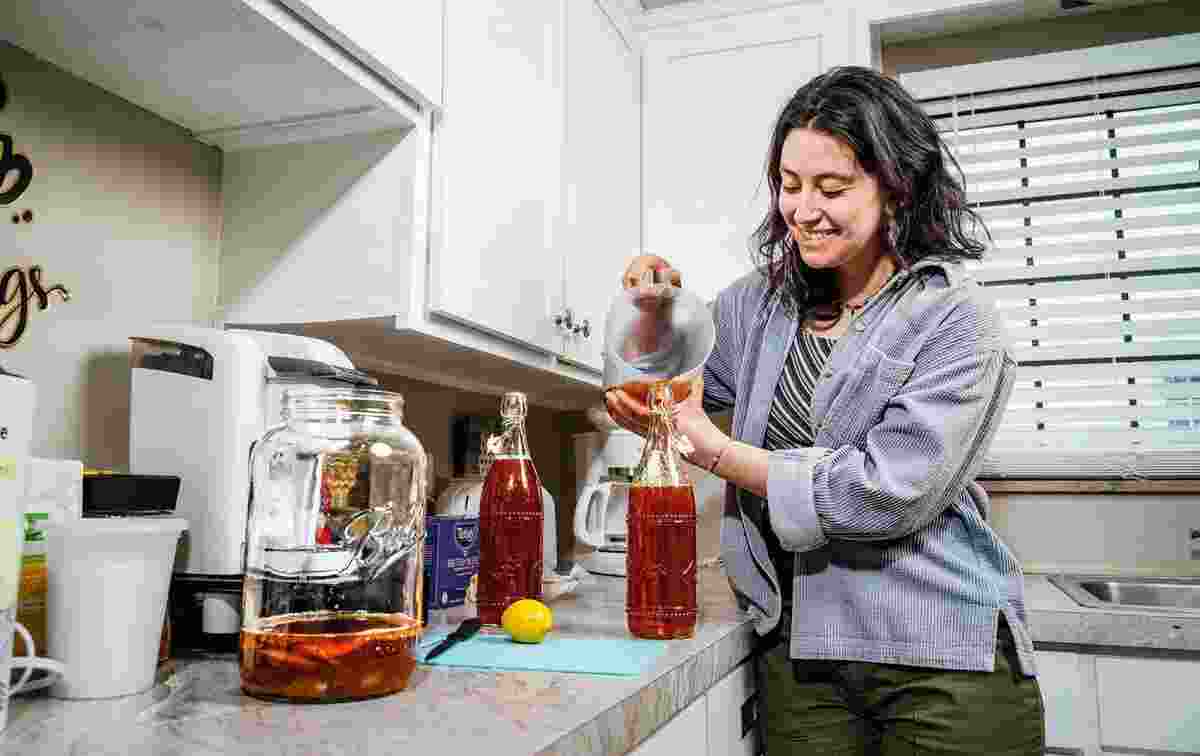
A traditional aged-fermented tea is increasingly being revived by China’s “millennials, ” as kombucha, once a fringe health drink, is quickly becoming a fast-growing urban trend. In all of China’s sprawling metropolises, young urban dwellers, students, and health buffs are taking up kombucha as a hobby, converting their apartments into mini fermentation labs, and forming online communities to exchange recipes, tips, and flavor ideas.
Originally a niche health drink, Kombucha has since became a figure of today’s Chinese health trend.
Today, videos like ‘Experiencing first fermentation’ are widely circulated on social media, hoping to inspire more first time brewers. Kombucha cafes and boutiques are also springing up, offering locally brewed products in a range of healthful flavors including tropical fruits and traditional Chinese medicines. Kombucha is made by fermenting sweetened tea with a symbiotic culture of bacteria and yeast, or SCOBY.
Fermentation causes the microbes to metabolize most of the sugar while generating organic acids, natural carbonation and compounds responsible for the characteristic sour taste. The process has intrigued several young enthusiasts who view it as a perfect amalgam of chemistry experiment and an artistic pursuit. The rise in popularity of kombucha can be directly attributed to a general increase in people’s knowledge about gut health.
While research into the health benefits of drinking kombucha is still in its infancy, the positive reputation that comes from its probiotic qualities and promoting good digestive health is appealing to many consumers. For younger consumers concerned with their sugar intake, a significant benefit of kombucha is that it is a more realistic beverage than the sweetened soft drinks. The fermentation trend has evolved into a social event as well.
Groups of friends trade new SCOBY strains, share brewing techniques, and develop distinctive recipes that incorporate ingredients popular to the regional palate. Common varieties include jasmine tea chrysanthemum lychee peach dragon fruit, ginger, and various citrus fruits. Urban cafs have adapted rapidly to this growth and in cities likeShanghai Beijing Shenzhen and Chengdu.
Many independent coffee shops and wellness cafs have started offering the possibility of drinking house-made kombua with their specialty coffee or herbal teas. Others even present seasonal and limited editions full of fresh, exciting flavors. Kombucha’s widespread popularity has led to a rise in the sales of its associated equipment for home brewing such as glass fermentation crocks, reusable brew bottles, pH indicators and cultures.
Site like Amazon offers state of the art grinding kits suitable for beginners making fermentation an easy to learn pleasant activity for new comers. Social media has further aided kombucha’s rapid ascendancy. People share their own brewing storiescase studies that show the mishaps and the triumphsoffering encouragement and highlighting the enjoyable aspects of fermentation. Brew blogs have helped normalize the activity and ask “why not?” to potential consumers.