

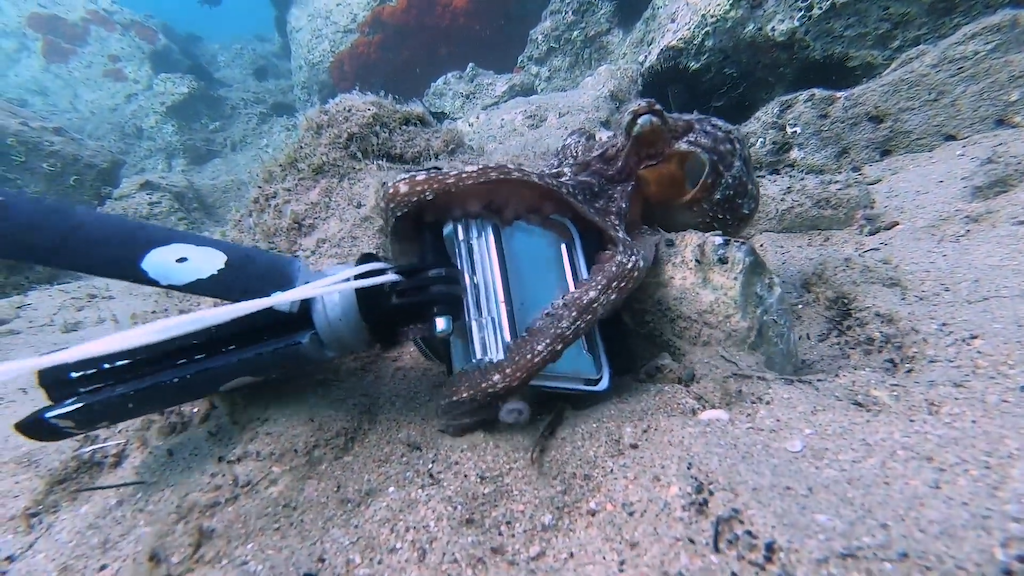
A fantastic underwater video of an octopus stealing a GoPro camera from an Aussie diver has gone viral, delighting social media users. The encounter happened when an Australian teen was snorkeling off the coast of New South Wales in the Boderee National Park. When the animal decided to steal the equipment, 15-year-old Jesse Loffel was filming an octopus from a safe distance in Jervis Bay. The octopus reached out its tentacles and grabbed the selfie stick before pulling it in, which resulted in an epic tug of war. The octopus eventually gave up and let the camera go.
The footage has been viewed more than a million times on Facebook. One commenter wrote: “If ever there was a GoPro ad, this is it.” Another said: “Wow, that’s some video, that is so cool! I’d love to see that in person!”
Other users were impressed by the octopus’s determination to keep hold of the camera. One wrote: “I’ve seen octopus steal cameras before, but never to this extent; it’s incredible! A truly epic underwater battle.”
Others were more concerned about the octopus’s bite potential. A marine biologist who studies octopuses told the Sydney Morning Herald that while a bite from a blue-ringed octopus can be fatal, such incidents are rare. He added that the venom from such an octopus is concentrated in a small area at the base of the arms, making it unlikely to spread throughout the body.
Nonetheless, a person who has been bitten should seek immediate medical attention. They should also remove the person from the water and apply pressure to the wound. The expert warned that such treatment is similar to that for a snake bite.
Scientists are still determining where octopuses get their tetrodotoxin, which they use to defend themselves against predators and hunt prey like fish and crabs. One theory is that the toxin comes from bacteria living inside their salivary glands, while another says they may absorb it from other sea creatures they consume.
Despite their fearsome reputation, Australia’s three official species of blue-ringed octopus have only killed three people. They are infamous for their ability to leave behind a lethal neurotoxin called tetrodotoxin, which is supposedly up to a thousand times more toxic than cyanide. Symptoms of a bite include tingling around the mouth, weakness and loss of control of limbs, or even paralysis of the breathing muscles. Those with severe symptoms should be treated at a hospital immediately.