

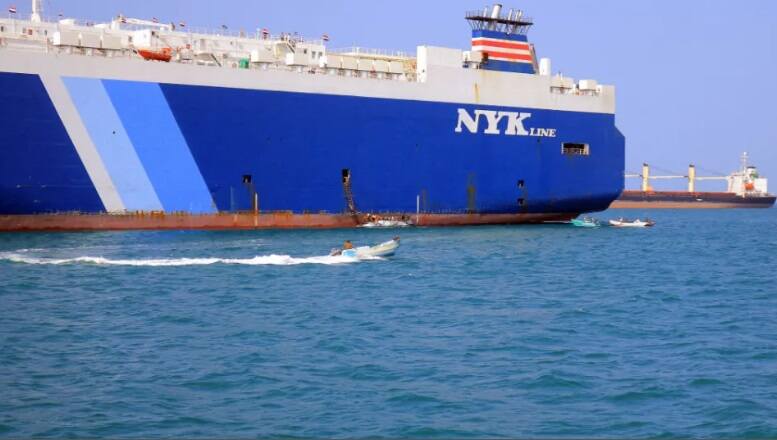
Shipping in the Suez Canal Affected by Houthi Assaults in the Red Sea

The Iran-aligned group has launched drones and missile attacks at commercial ships at the southern end of the Red Sea, which connects to Egypt’s Suez Canal in the north and the Mediterranean Sea. The attacks have prompted several shipping companies to divert vessels, avoiding the route that would take them through Egypt’s port city of Ismailia and the disputed Bab el-Mandeb strait at its southern end. That is adding cost and time to ship journeys and raising insurance premiums, which have jumped by the tens of thousands of dollars for some vessels.

“These are significant and unprecedented developments that could have major implications for global trade,” said the European Union’s foreign policy office late last week. It says the Houthi attacks violate international law and “pose a serious threat to maritime safety and security.”

Shipping lines are rerouting their vessels, mainly those with Israeli connections, away from the Red Sea and the nearby strategic Bab-el-Mandeb chokepoint in response to the Houthi attacks. Denmark’s Maersk and Germany’s Hapag-Lloyd, among others, have all announced that they will avoid the area. According to shipping data analyst Lloyd’s List Intelligence, The rerouting will likely cut through 12 percent of the world’s trade and 30 percent of its container traffic.

That could be better news for the companies that handle most international goods moving between Asia and Europe, which rely on the Red Sea and the canal to get their products to their destination. It will also impact the oil companies that use the area to move their products around the globe and manufacturers of everything from clothes to cars and food.

In an interview with CBC News, Moody’s investment service senior analyst Michael Aldwell says the longer voyages from Asia to Europe will have significant financial impacts. That’s because the vessels will use more fuel to cover the additional miles, and the extra time on the water will raise transport costs for the cargoes themselves. The extra cost could eventually be passed on to consumers.

Despite a call for an immediate ceasefire by the UN and a warning from Israel to the Houthis that the attacks must stop, the escalation of the conflict hasn’t slowed down. And it’s unclear what can be done to halt the violence. A military solution would require many naval ships to protect ships, which could be very expensive for shipping companies.

The attacks have triggered fears that shipping routes could be disrupted and prices will skyrocket, especially in the case of oil. That’s because the Red Sea is a crucial part of a worldwide supply chain that relies on the canal, which allows ships to bypass the Atlantic Ocean and save weeks on their journeys to Europe from Asia.

The attacks have already raised the cost of insurance for many ships, and Moody’s expects that to continue as more companies reroute their ships around the region.

Most Popular

More from Walops

RECOMMENDED FOR YOU

Looking into 8xbet: A New Way to Connect and Get Rewards Online

In today's rapidly changing digital world, platforms like 8xbet are changing the way people enjoy sports-based entertainment. 8xbet has become a popular place for people who want to game online in a simple and easy-to-use way because of its advanced technology and user-friendly interfaces. The platform is...

Amazon Budget Sneakers Ditch Name Brands for Cloud-Like Comfort

Shoppers are increasingly swapping expensive name-brand sneakers for affordable alternatives on Amazon, drawn by exceptional all-day comfort that feels remarkably like walking on clouds. These budget-friendly options, often priced between $25 and $50, deliver soft cushioning, lightweight construction, and reliable support without the premium markup of brands...

Packaging Industry Maintains Steady M&A Momentum in Q1 2026 Despite Geopolitical Tensions

The global packaging industry has shown remarkable resilience in the first quarter of 2026, with merger and acquisition activity holding steady even as concerns over the escalating US-Iran conflict ripple through supply chains and energy markets. Despite widespread predictions that geopolitical instability might slow deal-making, packaging companies...

Gen Z Catholic Influencers Make Faith Cool Again on TikTok and Instagram

A fresh wave of young Catholic creators is transforming how faith appears online, turning ancient traditions into relatable, visually stunning content that resonates deeply with Generation Z. In early 2026, these hip influencers are amassing hundreds of thousands of followers by blending authentic spirituality with modern aesthetics,...

Lab Grown Oesophagus Breakthrough Brings New Hope for Children with Rare Birth Conditions

A groundbreaking medical advancement is reshaping the future of organ replacement as scientists successfully develop a fully functional lab-grown oesophagus. This innovation, led by researchers from Great Ormond Street Hospital and University College London, represents a major leap forward in regenerative medicine and offers new hope for...

Electronic Arts $55 billion buyout reshaping gaming industry future

The gaming industry is undergoing one of its most significant transformations as Electronic Arts moves closer to a massive $55 billion buyout. Known for blockbuster franchises like FIFA, Battlefield, and The Sims, the company is set to transition from a publicly traded giant into a privately owned...

US and Cuba Resume Diplomatic Talks Amid Rising Tensions

After years of strained relations and political hostility, the United States and Cuba have once again reopened diplomatic discussions, signaling a potentially significant moment in one of the world’s longest-running geopolitical standoffs. Officials from both nations have confirmed that talks are underway as the two governments attempt...

Fuel Supply Panic Triggers Long Queues Across South Asia

Fuel stations across parts of South Asia have recently seen long queues and rising public anxiety as a developing energy crisis disrupts supply chains and pushes governments to implement emergency measures. The situation has been triggered by a combination of geopolitical tensions, rising oil prices, and uncertainty...

Global Trade Tensions Spike as Geopolitical Crises Rattle Markets and Supply Chains

In 2026, geopolitical trade tensions are no longer distant policy issues — they’re actively disrupting markets, shipping routes, and economic forecasts around the world. These developments are reshaping the way nations trade, multi-national supply chains operate, and financial markets react, highlighting how politics and economics are deeply...

Next-Gen Cancer Therapy Breakthrough Using mRNA Nanobodies

In what researchers are calling a major leap forward in cancer immunotherapy, scientists have developed an innovative mRNA-encoded nanobody therapy that shows powerful promise against colorectal cancer — one of the world’s most common and deadliest malignancies. This breakthrough combines advanced genetic delivery systems with tiny, highly...

Nepal Social Media Shutdown and Youth Uprising Shake Digital Freedom

In a dramatic escalation that captivated attention across the globe, Nepal’s government moved to block access to some of the world’s most widely used social media platforms — including Facebook, X (formerly Twitter), Instagram, and YouTube — triggering widespread unrest and a political crisis rooted in digital...

India Brazil Trade Expansion Unites Two Global Economies

In a major shift highlighting emerging market cooperation in 2026, India and Brazil are preparing to take their economic partnership to unprecedented heights during Brazilian President Luiz Inácio Lula da Silva’s upcoming state visit to India from February 18 to 22. This diplomatic and economic tour —...